The Nourishment Directory · State Reports · No. 1 of 51
Arkansas: Where Half of America's Rice Grows, and One in Four Children Faces Hunger
The first of our state-by-state research walks. Why we start here, what the numbers actually say, and the plain logic of what comes next.
A WholeFam research briefing · September 2026 · Sources: USDA ERS, Feeding America Map the Meal Gap, University of Arkansas System Division of Agriculture
Why Arkansas Comes First
The state with the hardest numbers
of Arkansas households were food insecure on average across 2022–2024
The highest rate of all 50 states (U.S. average: 13.3%)
Arkansans face hunger, including 188,560 children
Feeding America, 2024
estimated annual food budget shortfall of Arkansas households facing hunger
The dollar gap between need and resources
of Arkansas children are food insecure
1 in 4
Every list has to start somewhere, and we chose the state with the hardest numbers. Not the loudest, not the best-known — the one where, according to the USDA's own household survey, more than one in five households at some point in the year could not be sure there would be enough food. This is a walk through what that means in real places, on real soil — and what a household, a street, and a state can do about it.
The Map of the Need
Where Hunger Concentrates
Overall food insecurity by county — Arkansas's highest counties vs. its lowest
Lee County
Highest childhood food insecurity rate in the nation
Feeding America Map the Meal Gap 2024
Phillips County children
45.8% food insecure
Feeding America Map the Meal Gap 2024
Adult food insecurity — a University of Arkansas study found six counties at 32% or more:
Hunger in Arkansas is not evenly spread. It concentrates in the Arkansas Delta — the eastern river counties — and in a band of the state's rural middle. If you live in Phillips or Lee County, roughly one child in two is food insecure. In Benton County, it's one in six or seven. Any honest response has to be built at that level of detail — which is why our directory lists resources by county and city, never just "Arkansas."
The Paradox of Plenty
The State That Feeds the Country
Here is the thing that makes Arkansas the right first chapter. This is one of the great agricultural states of the world. Arkansas grows nearly half of all American rice. It ranks second in the nation in broiler chickens, eleventh in soybeans, third in cotton. Agriculture and forestry contribute roughly $19–21 billion a year to the state's economy — 14 to 16 percent of everything Arkansas produces. More than 95 percent of its farms are family-owned. The Delta soils of eastern Arkansas are among the richest on the continent. And still: one in four children faces hunger. The problem in Arkansas is not the absence of food. It is the distance between the systems that grow food and the households that need it. That distance is what a trailguide is for.
What Arkansas Grows
- ●Rice — nearly 50% of all U.S. rice
- ●Broilers — #2 in the nation
- ●Soybeans — ~3.3 million acres
- ●Cotton — #3 in the nation
What Arkansas Households Face
- ●19.4% household food insecurity
- ●1 in 4 children food insecure
- ●SNAP reaches only ~62% of eligible residents
The Gap in the Safety Net
SNAP is the first floor — and thousands fall below it
SNAP — the modern food-stamp program — is the first floor of food security in America. In Arkansas, about 240,000 people rely on it. But Arkansas has had among the lowest SNAP participation rates in the nation: only about 62–69 percent of eligible Arkansans who could receive help actually do. Thousands of households fall between the programs that exist and the food they need — some because of paperwork, some because of stigma, some because work and hours of a distribution simply don't fit a working life. That is precisely the kind of gap a directory closes: free food that requires no eligibility interview — gardens, gleaning, fridges, community meals — alongside the programs, not instead of them.
of eligible Arkansans were enrolled in SNAP pre-pandemic
Third-lowest participation rate in the nation (CBPP/USDA)
Arkansans receiving SNAP (FY2025)
The first floor of food security in America
The Soil Underneath It All
We Are Implementing the Logic of Kiss the Ground. Plainly.
Kiss the Ground (2020), dir. Rebecca & Ryland Tickell — official trailer
We want to be straightforward about where our approach comes from. The documentary Kiss the Ground made one argument that changed the conversation: the soil beneath us is a living system, and how we treat it decides how much food — and how much freedom — grows from it. WholeFam is simply implementing that logic, household by household. We take no other position. The six principles of soil health the film popularized are the same six ideas our trailguides teach at the scale of a yard, a raised bed, and a community garden plot:
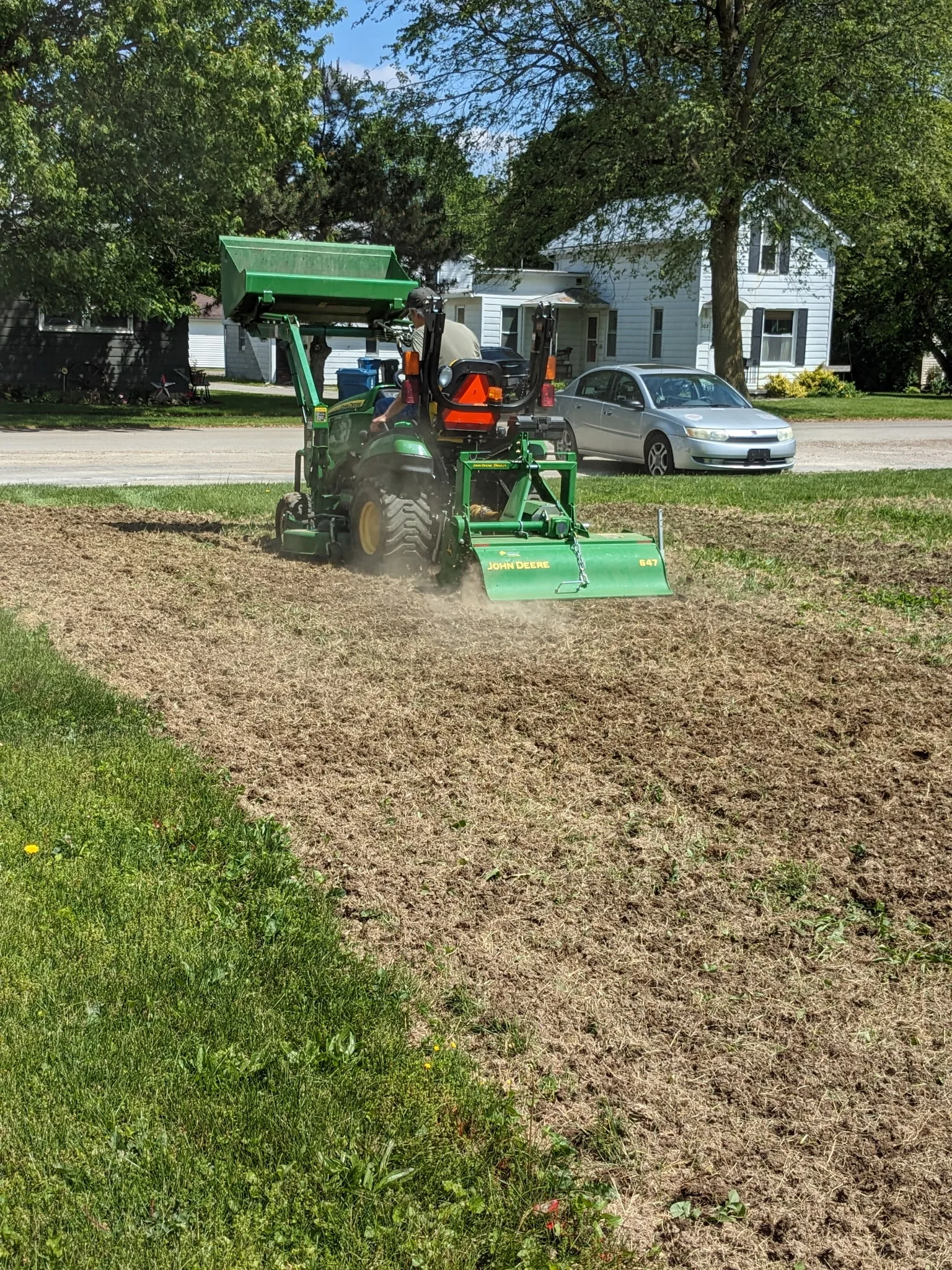
And Arkansas is already living proof the logic works at the farm scale: Delta rice growers using alternate wetting and drying cut methane emissions by 30–70 percent and save up to 30 percent of irrigation water without losing yield. The University of Arkansas's Discovery Farms put real-time water monitoring on working farms to prove conservation practices in the field. Cover crops — cereal rye, clover, vetch — are spreading across the Delta with NRCS cost-share support, rebuilding organic matter in soils that a century of tillage wore down. Heifer Ranch in Perryville is a Savory Institute hub teaching regenerative grazing on 1,200 acres.
The knowledge exists. The demonstration farms exist. What's missing is the last mile: the household that doesn't yet know how to start, or where to find the free food and free gardening help that is already within reach. Building that last mile is our work.
Where to Find Free Food in Arkansas Today
The Help That Already Exists
Before any trailguide is finished, here is the network already working — verified from public sources. This is the Arkansas seed of the Nourishment Directory.
| Food Bank | Home City | Serves | Public Contact | Annual Scale |
|---|---|---|---|---|
| Arkansas Foodbank | Little Rock | 33 counties | arkansasfoodbank.org · info@arkansasfoodbank.org | 40M+ lbs/year, 400+ partner agencies, 280,000+ people served |
| River Valley Regional Food Bank | Fort Smith | 8 counties | rvrfoodbank.org | ~14M lbs/year, ~100,000 residents monthly |
| Northwest Arkansas Food Bank | Lowell | Benton, Carroll, Madison, Washington | nwafoodbank.org · info@nwafoodbank.org | 14.4M+ lbs/year |
| Food Bank of Northeast Arkansas | Jonesboro | 12 counties | foodbankofnea.org · info@foodbankofnea.org | 8.5M+ lbs/year, ~140 partner agencies |
| Food Bank of North Central Arkansas | Mountain Home | 9 counties | foodbanknca.org · info@foodbanknca.org | 3.5–5.2M lbs/year |
| Harvest Regional Food Bank | Texarkana | 9 SW Arkansas counties | harvestregionalfoodbank.org | 3.2–5M lbs/year |
Beyond the food banks
Free Gardens
- ·Oak Forest Community Garden & Dunbar Garden, Little Rock
- ·Tri Cycle Farms' tri-share model, Fayetteville — one-third of every harvest donated
- ·Cobblestone Farm, Fayetteville
- ·Antioch / Charlotte Tidwell Community Garden, Fort Smith
- ·Pine Bluff UAPB community gardens
Gleaning & Fridges
- ·Arkansas Gleaning Project with the Arkansas Hunger Relief Alliance
- ·Society of St. Andrew gleaning network
- ·Community fridges in Little Rock & North Little Rock
- ·Little Free Pantry sites citywide
Learn to Grow Free
- ·University of Arkansas Division of Agriculture Extension & Master Gardeners
- ·Heifer Ranch regenerative workshops, Perryville
- ·Delta Fresh Foods Initiative
If you take one thing from this gallery, take this: in every one of Arkansas's 75 counties there is at least one place where free food changes hands today, and at least one person teaching how to grow it. The directory's job is to make those findable from one search box.
The Trailguide Out
So What Does a Household Actually Do?
This week
Find your nearest food bank or pantry from the table above and use it — no shame, that is exactly what it exists for.
This season
Put your hands in soil — claim a community-garden plot, join a gleaning day, or start one raised bed with the six principles above.
This year
Move toward food self-sufficiency at your own pace — every trailguide we publish is built from the same research method as this report: listen to real situations, gather the best practical knowledge across cultures and traditions, check it for safety, have two experts review it, field-test it with real households, and only then publish it — and keep improving it.
Arkansas grows half the nation's rice and one in four of its own children are hungry. The gap between those two facts is not fate. It is a to-do list — and it starts with knowing where the free food and the free help already are. That is the directory. That is the trailguide. That is the work.
— The WholeFam research team
USDA ERS, Household Food Security in the United States in 2024 (ERR-358), Table 5. Feeding America, Map the Meal Gap 2024 (feedingamerica.org/hunger-in-america/arkansas). Aspire Arkansas food insecurity data (aspirearkansas.org). University of Arkansas study on adult food insecurity (news.uark.edu). CBPP SNAP factsheet & USDA SNAP data. Arkansas Hunger Relief Alliance. University of Arkansas System Division of Agriculture. Compiled and verified by WholeFam, September 2026.